
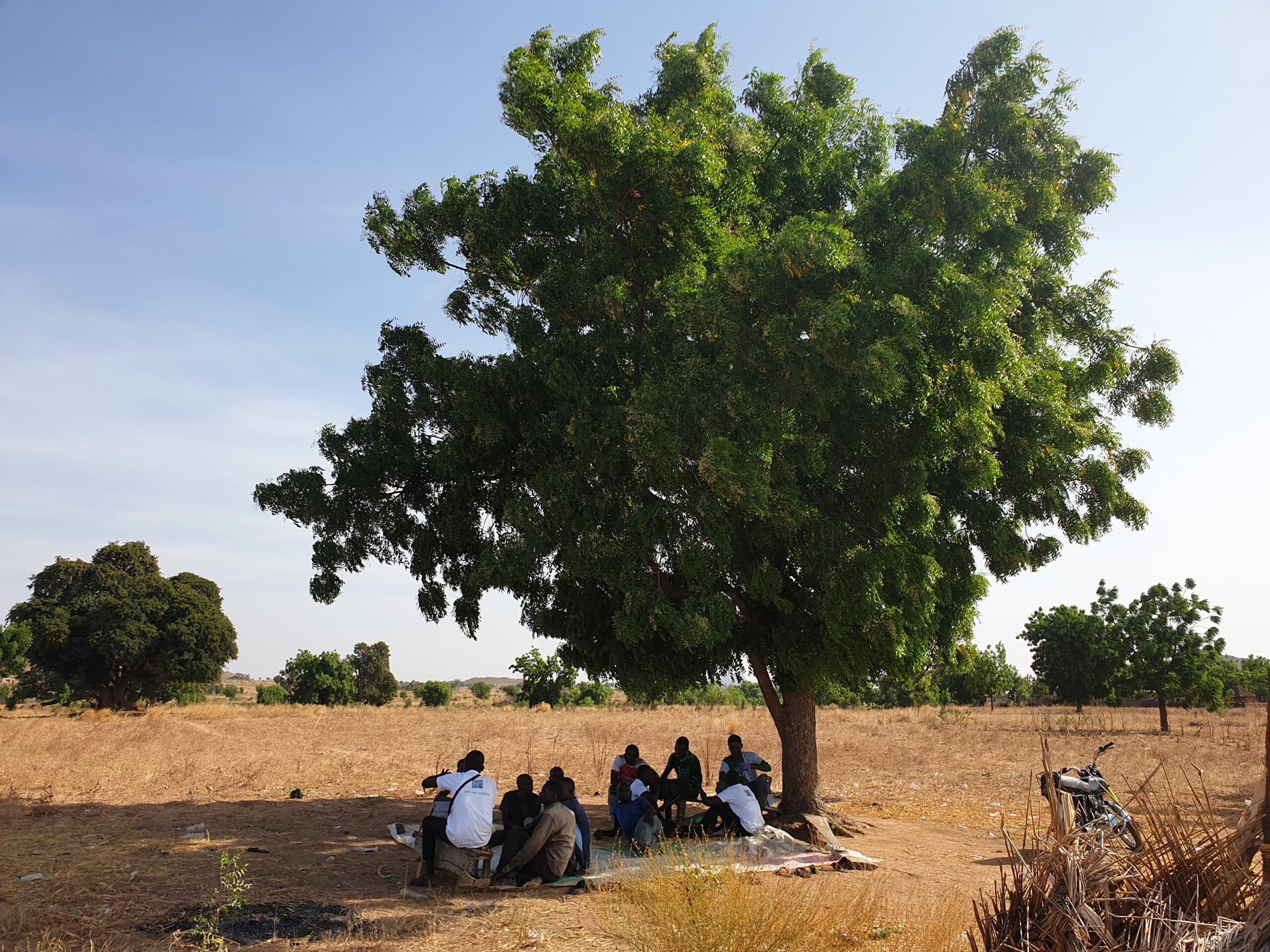
— Field Report • Kaltungo LGA, Gombe State —
What the Field
Actually Taught Us
A pilot in Kaltungo confirmed something no desk research ever could — the biggest obstacle facing Nigerian smallholder farmers isn’t productivity. It’s invisible risk.
Sabi Farm Team • January 2026 • 6 min read
Before we built anything, we went to the field. What we found in Kaltungo Local Government Area, Gombe State, changed how we think about what Sabi Farm needs to be — and why it matters beyond technology.
The assumption going in was straightforward: farmers need better access to inputs, better prices, and better information. Come in with a platform, solve those problems, done. The reality was more complicated — and more human — than that.
What the pilot revealed wasn’t a productivity problem. It was a trust problem. An information problem. A protection problem. And to fix those, you have to understand them from the ground up.
✦
The Risk Farmers Carry Without Knowing It
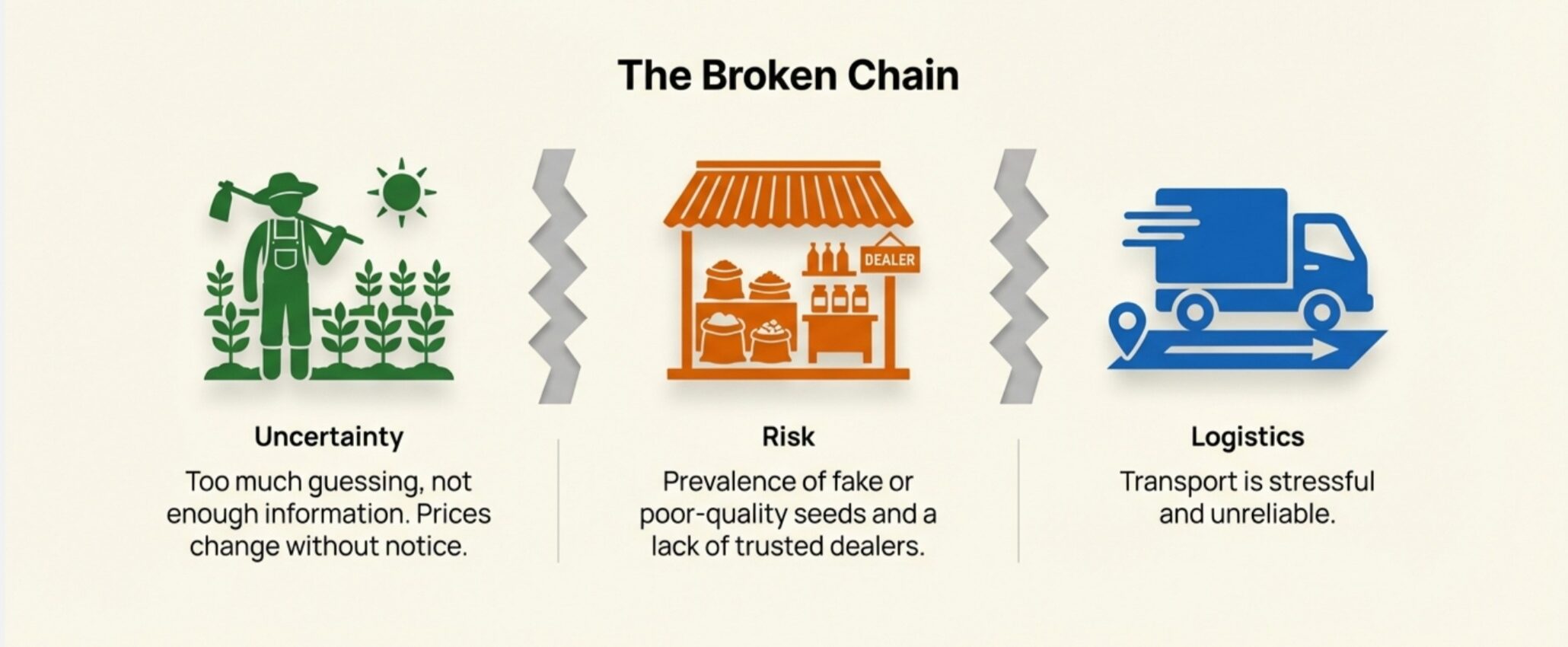
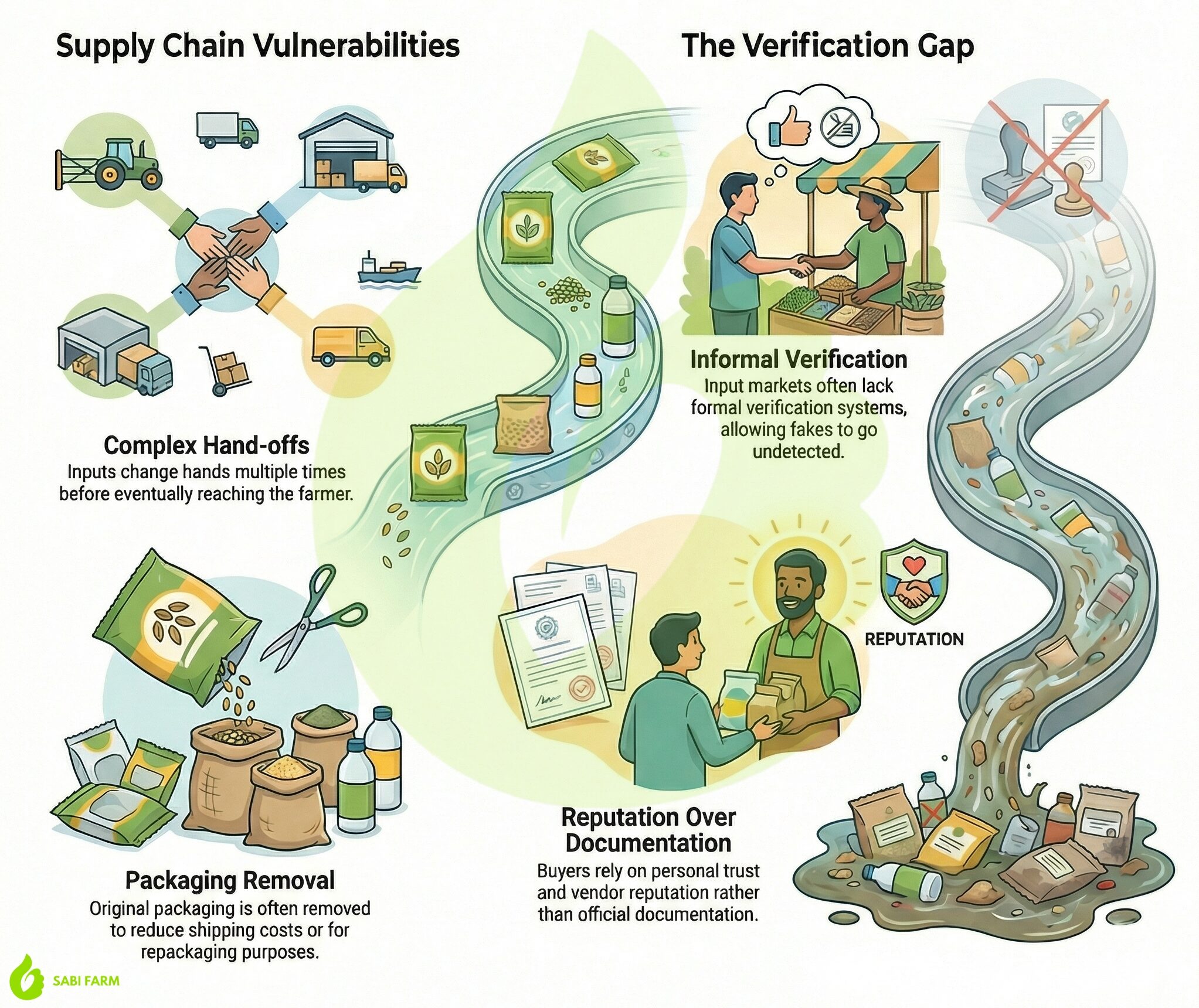
One of the most striking findings from Kaltungo was how exposed farmers are — legally and financially — without any awareness of that exposure. Farmers were purchasing seeds and inputs through informal channels, with no documentation, no verification, and no recourse if something went wrong.
When a batch of seeds underperforms or turns out to be counterfeit, the farmer absorbs the entire loss. There is no paper trail. There is no complaint process. There is simply a bad harvest and a quieter bank account.
“Farmers are exposed to legal and financial risk without protection — and most don’t know it until it’s too late.”
Sabi Farm Field Pilot Report, Kaltungo LGA
This isn’t ignorance in the dismissive sense of the word. It’s information asymmetry. The farmer doesn’t know what the dealer knows. They don’t know which seeds are certified, which aren’t, or what their rights are when a product fails. The system hasn’t been designed to tell them.
What the Pilot Confirmed
-
Farmers are buying inputs with no way to verify quality or authenticity -
Market opacity means price manipulation goes unchallenged -
Digital solutions that ignore language and culture fail silently -
Trust is built face-to-face first — technology comes second -
Seed identification and basic input literacy is a critical gap
✦
Digital Tools Don’t Work in a Vacuum
The pilot also tested how farmers engage with digital tools and forms. The finding was humbling: data collection tools designed without the farmer in mind create friction, confusion, and ultimately disengagement. Sections that were irrelevant to a farmer’s specific situation still had to be completed. Language barriers made simple questions feel like obstacles.
This isn’t a criticism of farmers. It’s a design failure. When you build for a general user, you build for nobody in particular. Kaltungo reminded us that a smallholder maize farmer in Gombe State has a specific reality — specific language, specific crops, specific challenges — and the tools serving them need to reflect that specificity.
Key Insight

Digital infrastructure that ignores culture, language, and local context doesn't just underperform —
it erodes the trust needed to make any solution work long-term.
Physical-first engagement isn't a stepping stone to digital.
It's the foundation digital is built on.
✦
What “Protection” Really Means Here
A phrase that came up repeatedly in the pilot findings: farmer records focused on protection, not compliance. That distinction matters enormously.
Compliance-focused record keeping is something done to farmers — forms filled out to satisfy someone else’s requirement. Protection-focused records are something done for farmers — documentation that gives them recourse, evidence, and standing when things go wrong.
The difference between those two approaches determines whether farmers engage honestly or find ways around the system. In Kaltungo, the appetite for protection was evident. The appetite for bureaucracy was not.
✦
What We’re Doing About It
The pilot wasn’t just observation. It shaped a concrete plan — one that acknowledges the realities on the ground rather than the assumptions on paper.
Next
90 Days
Formally documenting the seed quality issues identified during the pilot. Adjusting data forms so farmers can skip sections irrelevant to their situation. Introducing basic seed identification education and strengthening local language materials — because a tool that speaks the right language is a tool people will actually use.
Medium
Term
Piloting seed verification and reporting mechanisms that give farmers real recourse. Building farmer records designed around their protection. Refining our engagement model based on what the field actually showed us about how trust is built — physically first, digitally sustained.
Policy &
Partners
Engaging local authorities on farmer awareness gaps. Partnering with credible seed suppliers who take traceability seriously. Advocating for accountability measures that educate rather than punish — because criminalizing ignorance doesn’t fix ignorance.
✦
Why This Moment Matters
This pilot happened early. That’s intentional and important. The findings from Kaltungo will shape core decisions about how Sabi Farm is built — not as an afterthought, not as a pivot forced by failure, but as foundational design choices made before scale.
There is a version of an agricultural platform that optimizes for transaction volume and growth metrics while leaving the underlying trust deficit untouched. That version would be easier to build. It would also be less valuable and ultimately less durable.
Sabi Farm is being built as infrastructure — the layer beneath the transaction that makes the transaction trustworthy. Kaltungo showed us exactly why that layer needs to exist, and exactly what it needs to do.
“The findings validate the need for Sabi Farm as an infrastructure layer that protects farmers while enabling scale.”
Sabi Farm Field Pilot Report, Kaltungo LGA
Smallholder farmers in Nigeria are not a problem to be solved. They are a market to be served, a community to be supported, and — if the infrastructure is right — a powerful engine of food security and economic growth. They just need the system to be built honestly, with them in mind.
That’s what this pilot was about. And it’s what every decision we make from here is accountable to.
✦
Follow the Build
We share what we learn — from the field, the platform, and the communities we work with.
Visit sabi.farm
© 2026 Sabi Farm
Field Notes; Kaltungo Farmer Protection
This part about rigid digital forms really stood out. Many tools don’t understand that farmers are not one-size-fits-all. Forcing irrelevant questions wastes time and energy. Offline-first and flexible design should not be optional, it’s survival oo.
Thank you sir for coming to our side 🙏
Please don’t forget us
Wow this information is very vital and helpful.
Really enjoyed reading this.
There’s something about being on the ground that just changes how you see everything. You start to understand why farmers make the choices they do and how small things like where inputs come from can make a big difference.
Kaltungo looks like it gave a lot of clarity. Looking forward to seeing how this shapes what you guys are building.