
5 Surprising Lessons from Sabi Farm
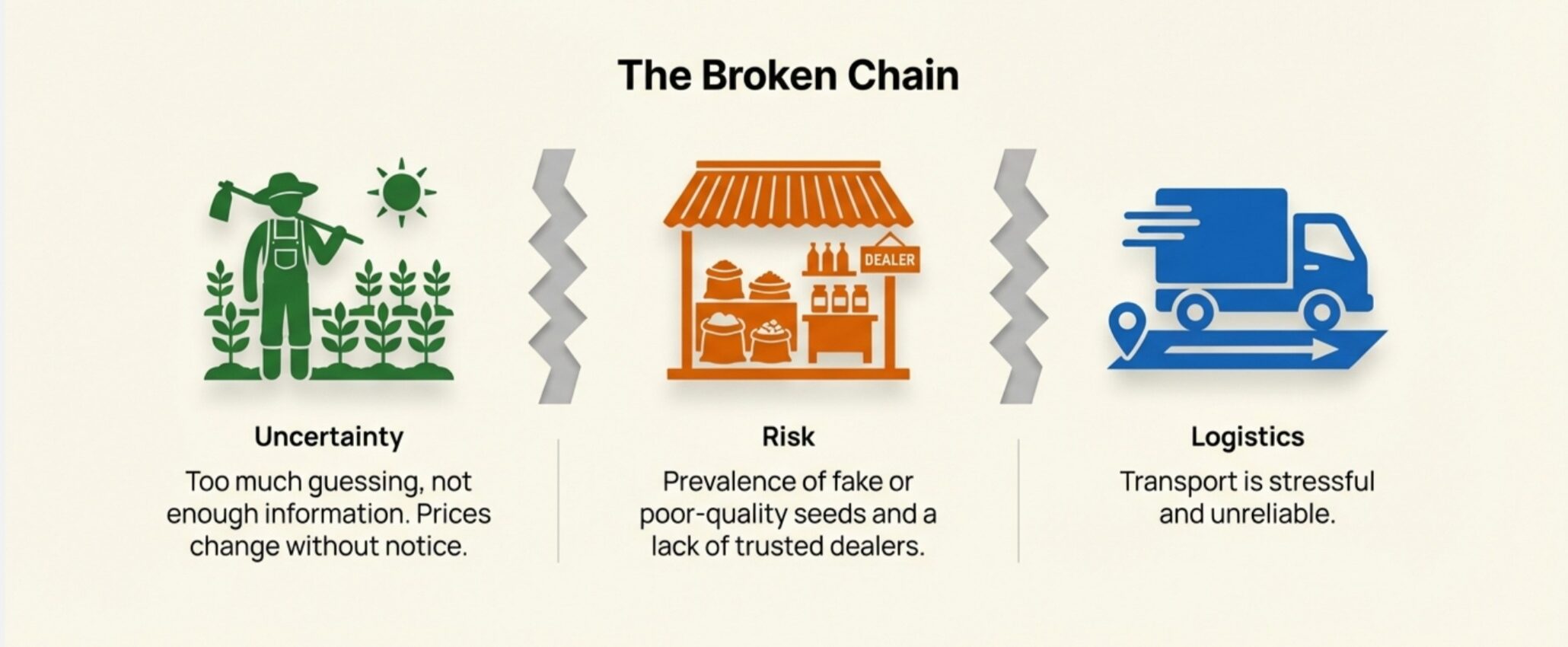
For years, the promise of “AgTech” has followed a predictable script: build an app, create a digital marketplace, and watch smallholder productivity soar. Billions of dollars have been poured into these solutions, yet the fundamental challenges of the Nigerian smallholder-yield risk, counterfeit inputs and market opacity-remain stubbornly unresolved.
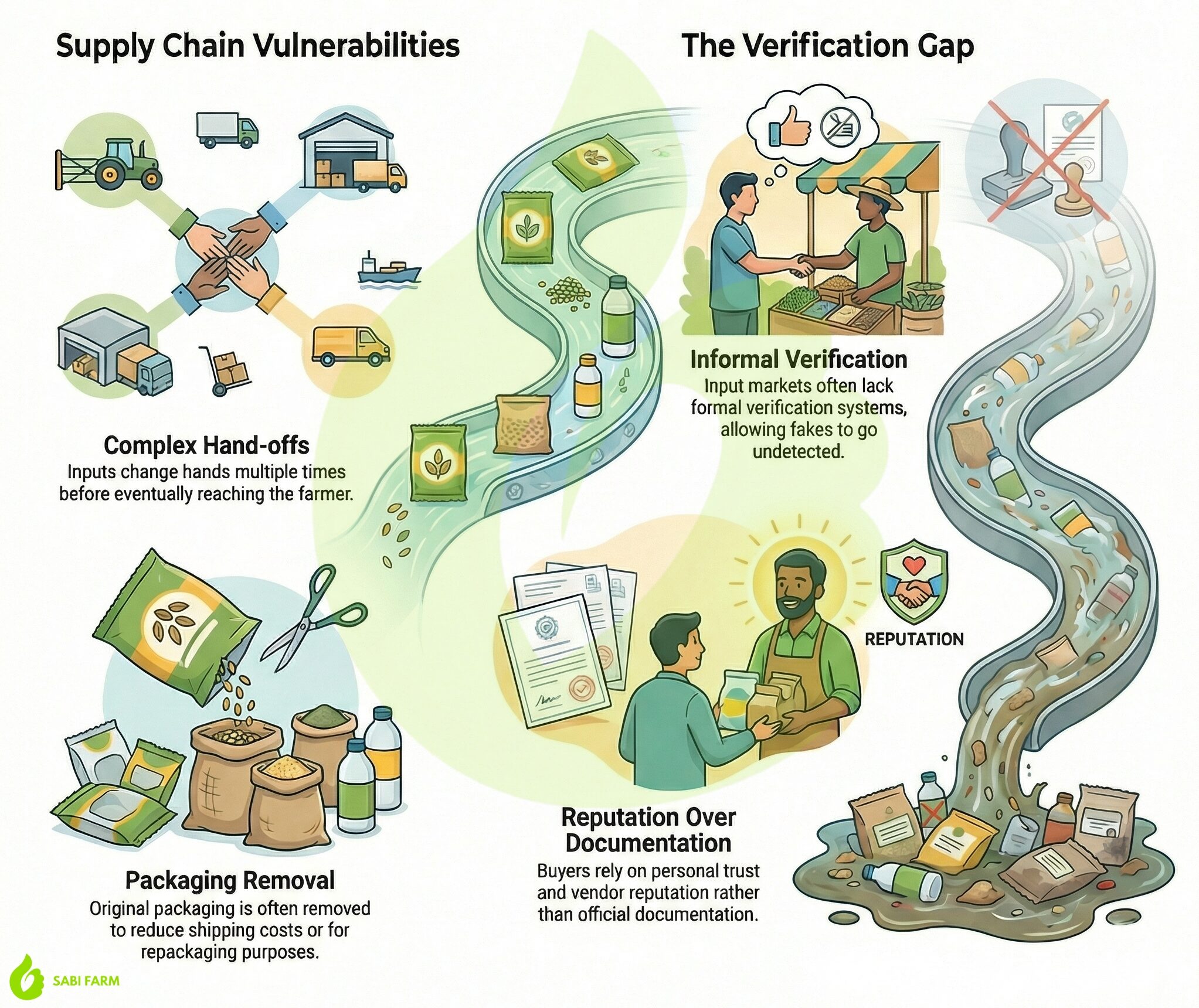
The failure isn’t due to a lack of “access” to technology. It is a failure to acknowledge a structural market failure: the inability to reliably document agricultural input sources in low-trust environments. In Nigeria, traceability often dies at the point of sale, where packaging is frequently removed, eliminating any hope of provenance. Enter Sabi Farm, a platform that is intentionally moving in the opposite direction. Rather than positioning itself as just another app, Sabi Farm is a “verification infrastructure” designed to document the truth of a transaction before it ever reaches a screen.
Here are five surprising lessons from Sabi Farm on why the future of African agriculture must be built offline before it can scale online.
1. Digitization Can Actually Amplify Risk
One of the most persistent myths in emerging markets is that transparency is a natural byproduct of digitization. In reality, the Sabi Farm framework argues that digital marketplaces often exacerbate the problem. When a platform digitizes a supply chain that lacks provenance documentation, it simply allows undisclosed and unverified suppliers to reach more victims with greater efficiency.
The core issue is information asymmetry. The problem isn’t that farmers can’t find seeds; it’s that they cannot verify the integrity of those seeds once they are separated from their original branding. Sabi Farm identifies that the structural failure of the market is rooted in a lack of documentation, not a lack of connectivity.
“Insufficient documentation, verification and coordination, not lack of access.”
By focusing on “documented-source input verification,” Sabi Farm addresses the trust deficit directly rather than trying to bypass it with a shiny interface.
2. The 70% Hidden Truth of Crop Failure
Common narratives around agricultural loss in Nigeria often point toward malicious scammers or intentional fraud. However, Sabi Farm’s field pilot—which observed over 300 farmers in the Kaltungo LGA of Gombe State—revealed a more nuanced reality.
During their “Loss Characterization” phase, the team discovered that a staggering 70% of mismatched inputs traced back to undeclared substitutions. These are often unintentional errors—swapping one variety for another due to supply chain breaks—that lead to devastating results because the input is fundamentally incompatible with the environment.
To combat this, Sabi Farm has integrated Compatibility Screening into its verification guts. By leveraging public agro-ecological datasets, the platform generates “Risk Flags” for soil pH misalignment, climatic incompatibility, and seasonal conflicts. This moves the narrative from “trust is good” to “data-backed verification is infrastructure,” providing an environmental truth-check that prevents accidental failure before a seed ever hits the ground.
3. Trust is an Offline-First Commodity
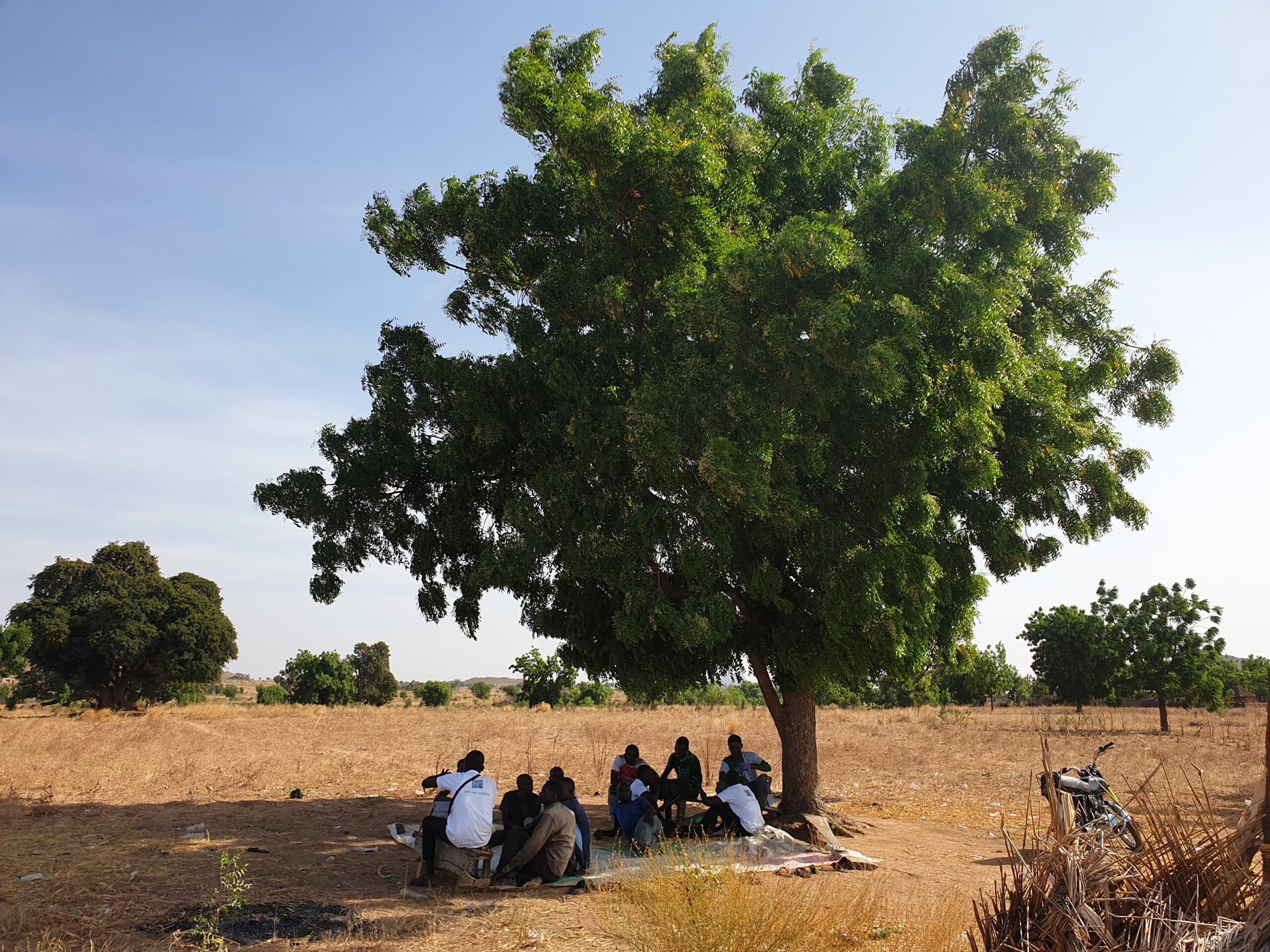
In an era of “growth-hacking,” Sabi Farm’s strategy is remarkably patient. They have adopted a Community-First approach that prioritizes physical presence over digital onboarding. Before a single line of code dictates a transaction, field agents and community elders are used to validate suppliers and build “behavioral alignment.”
This “Human API” is essential because, in low-trust environments, digital tools are only effective after trust has been established through traditional human networks. Most radically, the platform utilizes a Trust Failure Protocol (TFP). Unlike typical tech startups that prioritize “scale-at-all-costs,” Sabi Farm is designed to “pause onboarding” if verification integrity falls below strict audit thresholds. It is a strategy of deliberate stress control: ensuring the system’s credibility remains intact even if it means slowing down growth.
4. An Asset-Light Model Where the Farmer Pays Nothing
Perhaps the most radical aspect of the Sabi Farm model is its revenue structure. While many platforms seek to extract fees from farmers for “advice” or “access,” Sabi Farm’s revenue principles are strictly non-farmer-extractive.
Instead, the platform “taxes opacity” by placing the financial burden on the actors who introduce risk into the system. The model categorizes dealers into three clear tiers:
- Verified & Paying Dealers: Receive public listings and lower coordination fees.
- Verified but Non-Paying Dealers: Face higher per-transaction fees and limited access.
- Non-Disclosing (ND) Dealers: Are excluded from the system entirely.
From a strategic standpoint, the financial logic is highly efficient. By operating as an “asset-light” entity-coordinating logistics without owning trucks, fuel, or maintenance risks, Sabi Farm achieves a 77% gross margin on coordination fees. This allows the platform to remain sustainable while providing a free, high-integrity service to the smallholders who need it most.
5. Systems Over Scale (The 10-Year Horizon)
AgTech startups are often pressured to scale rapidly across all categories. Sabi Farm is taking a different path, operating on a 10-year horizon that prioritizes “credibility precedes growth.”
In its initial phase (Years 1-3), the platform is deliberately excluding high-risk categories like perishable produce and livestock. These sectors require complex cold chains that could compromise the integrity of a nascent verification system. By focusing strictly on grains and dry goods in Northern Nigerian pilot zones, they are ensuring the system is bulletproof before expansion. This discipline ensures that when they do scale, they are scaling a proven system of documentation rather than a fragmented network of promises.
“Credibility precedes growth. Systems precede scale.”
Redefining “Infrastructure” for 2026
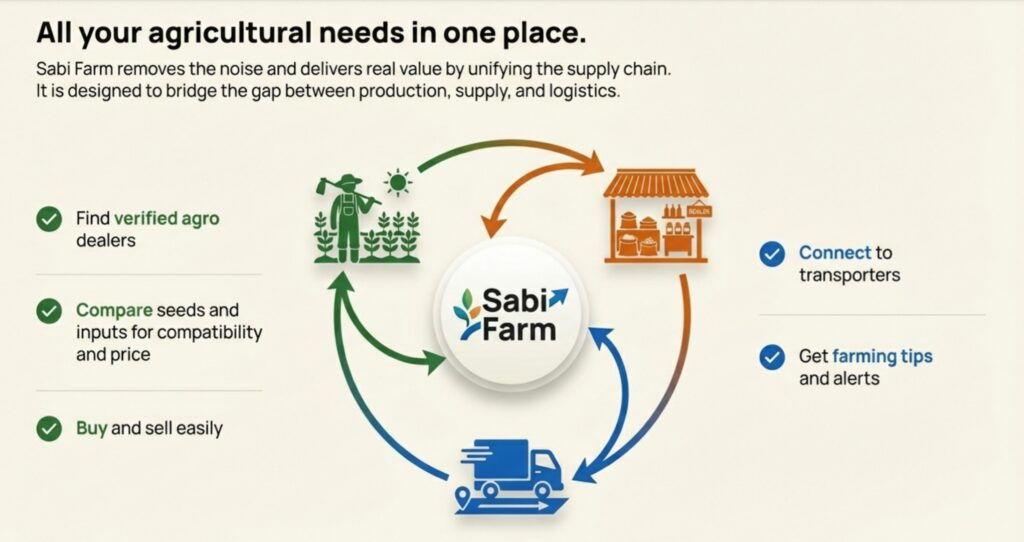
As Sabi Farm looks toward 2026, its vision of “infrastructure” is not about physical roads or high-speed fiber. It is about the “trust-rails” that allow a market to function. By documenting source inputs, flagging agro-ecological mismatches, and coordinating procurement through verified channels, they are building a foundation where logistics and aggregation become “optional upsides” rather than risky core requirements.
The success of Sabi Farm poses a critical question for the broader tech sector: In emerging markets, should we stop trying to “growth-hack” our way into the future and start “trust-building” our way out of the past? For the smallholders of Nigeria, the answer seems to be a resounding yes.

Maganar cire kwali da lakabi har bin sawun asali ya ɓace tun daga lokacin sayarwa gaskiya ce sosai.
Many discussions ignore what actually happens in markets. Offline documentation feels closer to how trust already works on the ground.